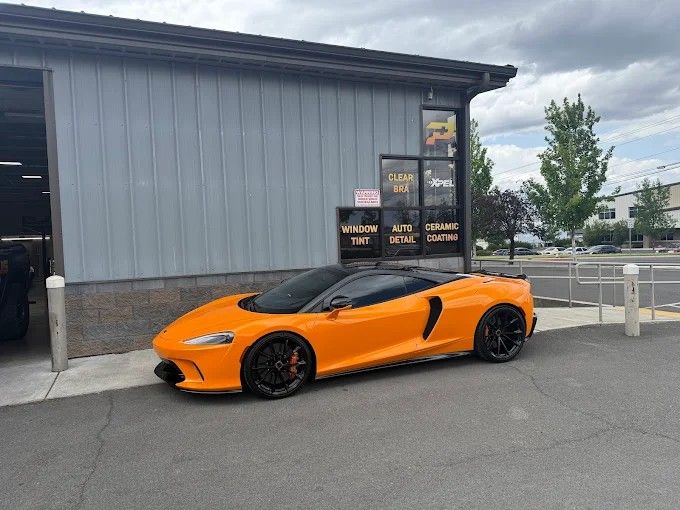
Why Lighting Is the Unsung Hero of a Flawless Ceramic Coating
July 27, 2026
Ask any seasoned installer what separates a good ceramic coating from a perfect one, and lighting comes up fast. Without the right light, even a skilled technician can miss the fine swirls, streaks, high spots, and uneven areas that a coating will lock in permanently. Here's how lighting shapes every stage of the process and why a controlled studio delivers results a home garage rarely can.
The short version: proper lighting lets a technician see the surface honestly. Bright, daylight-balanced light reveals the tiny imperfections that hide in shadow, so they can be corrected before the coating seals them in for years.
How Lighting Shapes the Whole Process
Think of lighting as a technician's eyes at full strength. Too dim, and subtle imperfections disappear into shadow; too harsh, and glare washes out the details you're trying to inspect. The goal is bright, even light that mimics natural daylight closely enough to reveal swirl marks, streaks, high spots, and thin coverage without overwhelming glare.
Quality matters as much as brightness. Daylight-balanced lighting, the kind sold as "daylight" bulbs, renders true colors and textures accurately, while warmer or cooler light can make a thin layer look like full coverage or hide a scratch entirely. Angle matters too. Light aimed across the surface rather than straight down casts gentle shadows over imperfections and makes them far easier to spot. Without that raking light, even bright overhead fixtures can make a surface look deceptively flawless.
Brightness and Catching What Hides in the Paint
Brightness directly affects a technician's ability to spot the smallest flaws. Insufficient or poorly directed light masks micro-scratches, swirls, streaks, and high spots that the coating then locks in place. Recreating natural daylight is the aim, because its even, full spectrum reveals surface texture without harsh shadows or blinding reflections. For a working studio, dedicated daylight-balanced fixtures deliver that consistency indoors regardless of the weather, a big reason a controlled environment outperforms a driveway.
The Truth About Curing and Lighting's Real Role
Here's a widely misunderstood point: a ceramic coating cures through a chemical reaction, not a lighting one. Once applied, it reacts with moisture in the air and cross-links, hardening from a liquid into a bonded protective layer. The initial set happens within a day or two, with full hardness developing over the following weeks. Temperature and humidity, not the light in the room, govern this, which is why a stable, controlled environment matters so much.
Where lighting does matter here is visibility. Good light lets a technician judge "flash time," the short window when the coating signals it's ready to be leveled, and confirm no residue, streaking, or high spots are left before the surface sets. Some shops also use heat to speed curing, since warmth accelerates the reaction, but it's the heat doing the work, not a light spectrum.
Evaluating the Finished Coating

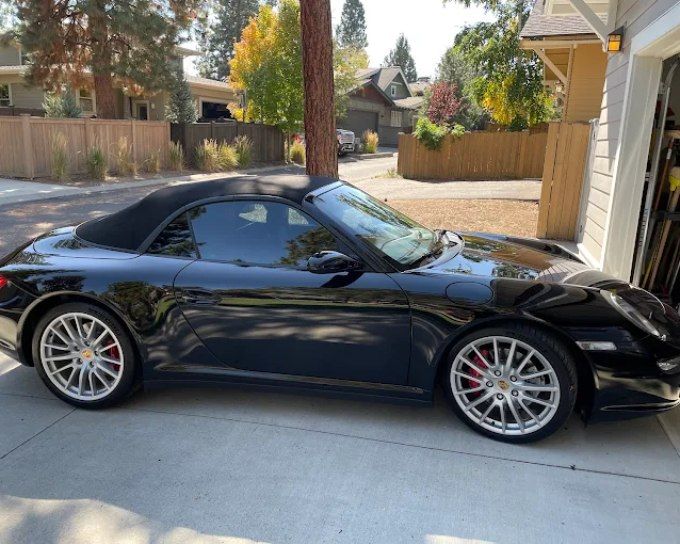
Once the coating is set, the real test begins: confirming every inch meets the standard. Inspecting from multiple angles is essential, because light reflects differently depending on where you stand. Moving around the vehicle reveals swirls, streaks, and unevenness a straight-on view would never expose. Blending natural daylight with daylight-balanced artificial light gives a fuller picture than any single source.
As imperfections appear, whether a high spot where excess coating gathered, a streak left during leveling, or a fine swirl from earlier, flagging them immediately keeps corrections organized. A few habits sharpen evaluation:
- Vary your angle and light source. Reflections tell the truth; one fixed viewpoint hides it.
- Keep a sensible viewing distance. Too close loses perspective; too far blurs detail.
- Protect color accuracy. Daylight-balanced light preserves the paint's true hue.
Because a coating magnifies whatever lies beneath it, even a minor missed spot dulls the result. Thorough inspection isn't a nicety. It's the difference between a finish that looks good on day one and one that holds up for years.
Professional Studio vs. Home Garage: Why the Setting Matters
This is where the gap between a professional installation and a DIY attempt becomes clearest. The coating might be identical, but the environment usually isn't, and lighting is one of the biggest reasons why.
A typical home garage is lit for parking, not for reading paint. The common setup is a single overhead source that throws light straight down, flattening the surface and hiding the very streaks, swirls, and high spots you need to catch. Mixed warm-and-cool bulbs distort color, so an uneven layer can look perfectly even. Add shadowed corners, glare off half-lit panels, and daylight shifting through the open door, and imperfections simply don't reveal themselves until the coating has locked them in.
A professional studio eliminates those variables. Lighting is bright, uniform, and daylight-balanced across the whole workspace, with fixtures positioned to rake across panels and expose texture. Portable lamps allow close inspection from multiple angles, and a final daylight check confirms the work before the vehicle leaves. It's the kind of controlled setting drivers in Bend, OR, and across Central Oregon rely on for a coating that's done right the first time. Just as importantly, the studio controls the temperature and humidity that govern curing and keeps the surface free of dust a garage can't shut out. The result isn't just a cleaner finish on day one. It's a more consistent, better-bonded coating that protects the way it should for years.
Common Lighting Mistakes
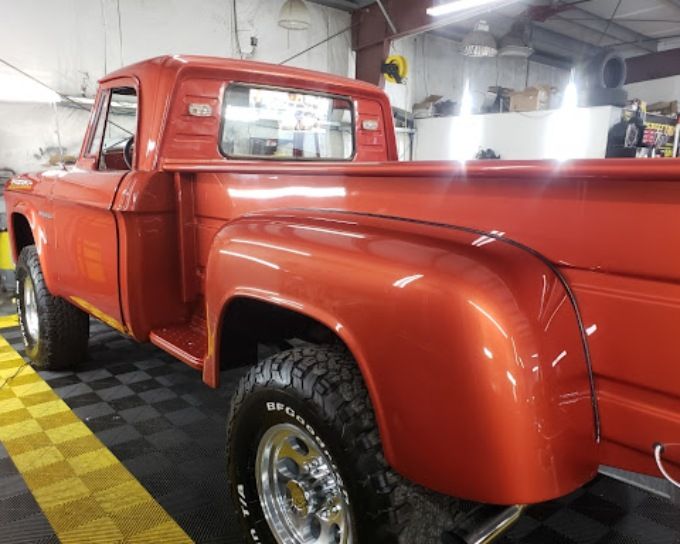

The biggest hazard isn't cheap fixtures. It's relying on a single kind of light, which lets some flaws never show up. Rotating between sources catches the streaks and blemishes that would otherwise slip past. Uneven lighting is another misstep: if half a panel is bright and the rest sits in shadow, the shadowed section gets a fraction of the scrutiny. And don't skip a natural-light check. Stepping into daylight often exposes ghosting, streaks, and missed spots that stayed hidden indoors.
What This Means When You Choose a Studio
The quality of a ceramic coating is decided long before you ever see the shine: in the correction done beforehand, the environment it's applied in, and the lighting that lets a technician catch every flaw before the coating seals it. If you're still weighing your options, it helps to understand how PPF and ceramic coating compare before you decide.
That's why a controlled, purpose-built studio produces results a driveway can't match. At Perfection Plus Auto Salon, meticulous preparation and daylight-quality lighting run through every stage, because a coating only protects as well as the surface underneath it. And protection doesn't stop at the paint. Pairing a coating with protective undercoating helps guard the underbody against road salt and moisture, which matters through Central Oregon winters. With more than 25 years in automotive protection and a client roster that includes some of the most demanding preservation projects in the country, we treat every vehicle as an investment worth protecting for the long term.
Protect Your Investment with Perfection Plus Auto Salon
Your vehicle deserves more than a finish that only looks good on day one. It deserves a coating applied with the precision, controlled conditions, and expert eye that make protection last. At Perfection Plus Auto Salon, proudly serving Redmond, Bend, and the greater Central Oregon area, we bring more than 25 years of experience and a purpose-built studio to every project, so nothing is left to chance and no detail goes unseen.
Ready to give your vehicle the protection it deserves? Schedule your consultation today, call us at (541) 598-6193, or fill out our online form, and experience the Perfection Plus Auto Salon difference for yourself.
Frequently Asked Questions
Can poor lighting lead to mistakes during application?
Yes. Weak or uneven light hides micro-scratches, swirls, streaks, and high spots, so they're never corrected before the coating locks them in, which is why clear visibility during the work is essential.
Does natural versus artificial light change how a coating cures?
Not really. Coatings cure through a chemical reaction driven by moisture, temperature, and time, not the light in the room. Good lighting affects accuracy, helping a technician apply the coating evenly.
Why can a professional studio catch flaws a home garage misses?
A studio uses bright, uniform, daylight-balanced lighting and close inspection from multiple angles, plus a final daylight check. A typical garage relies on a single overhead light and mixed-tone bulbs that flatten the surface, so streaks and high spots stay hidden until the coating sets.
Perfection Plus Auto Salon - Blog